Simplifying your business.

 One software for all of your locations.

 Earn cash by referring businesses to us.



If you’re a small business owner, you’ve probably worked hard to show up on Google. You’ve added keywords to your website. You’ve claimed your listings. You’re asking for reviews.
But search has changed.
Today, customers don’t just “search.” They ask questions. They use voice assistants. They rely on AI-powered summaries that pull quick answers from multiple sources.
That shift has created a new opportunity: Answer Engine Optimization (AEO).
And one of the most powerful (yet misunderstood) tools behind AEO is schema markup.
Let’s break it down in plain English — no coding degree required.
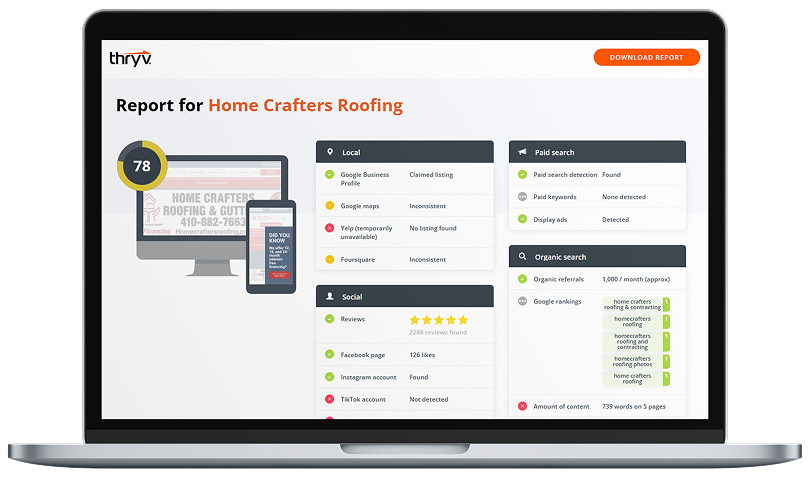
Market and Grow Your Business More Effectively With Thryv Marketing Center
Thryv Marketing Center helps you attract new customers to your business and shows you which marketing strategies work best for your customers so you don’t waste time and money on the wrong tactics.

What Is Schema Markup and Why Should You Care?
Schema markup is a type of structured data added to your website that helps search engines clearly understand your business.
Think of it this way:
Without schema, search engines are reading your website like a human skimming paragraphs and trying to interpret meaning.
With schema, you’re labeling the important details directly:
- “This is our business name.”
- “These are our services.”
- “These are our hours.”
- “This is our location.”
- “These are our FAQs.”
Instead of guessing, search engines know.
And when AI systems know, they’re more likely to surface your business as the answer.
Why Schema Matters for AEO
Answer engines like Google’s AI results, voice assistants, and smart search features rely on structured data to provide fast, accurate responses.
When someone asks:
- “Who’s the best HVAC company near me?”
- “What time does this dentist close?”
- “How much does a roof repair cost?”
Search engines look for clear, structured information.
If your website includes schema markup, it increases the likelihood that:
- Your business details are interpreted correctly
- Your services are matched to relevant questions
- Your FAQs are pulled into featured snippets
- Your business appears in voice search results
Schema helps search engines understand your business, not guess.

How Schema Increases Eligibility for Rich Results
You’ve seen enhanced search results before:
- Star ratings under a business listing
- FAQs that expand directly on the results page
- Service lists showing up below a link
- “People also ask” boxes
- Voice assistant responses
These are called rich results.
Businesses using schema markup are more likely to qualify for them because structured data signals credibility and clarity.
For small businesses, this matters because:
- You gain more visibility without paying for ads
- You stand out against competitors
- You occupy more space on the results page
- You increase click-through rates
Schema doesn’t guarantee a featured spot. But it increases your eligibility.
And in competitive local markets, eligibility is everything.
What Types of Schema Matter Most for Small Businesses?
You don’t need every type of schema. Focus on the ones that directly support how customers find and choose you.
1. Local Business Schema
Identifies your:
- Business name
- Address
- Phone number
- Hours
- Service area
This reinforces your local authority and helps with map and voice search accuracy.
2. Service Schema
Clearly defines what you offer. This helps match your business to specific customer queries.
3. FAQ Schema
Allows common customer questions to appear directly in search results.
4. Review Schema
Supports star ratings and credibility signals.
Each of these builds clarity — and clarity builds visibility.
You Don’t Need to Be Technical to Benefit
One of the biggest misconceptions about schema markup is that it requires advanced coding.
Years ago, that may have been true.
Today, many modern website platforms support structured content automatically. When you:
- Add business details to your site settings
- Structure services clearly
- Create FAQ sections
- Organize content properly
The platform may already be applying structured data behind the scenes.
That means small businesses can gain AEO advantages without hiring a developer.
Reducing the technical burden is key. If optimization feels overwhelming, it doesn’t get done.

We’re sharing our expert tips to help you boost productivity, eliminate time-wasting tasks, and more in this free guide.
Download Now
Why Consistency Matters Beyond Your Website
Schema on your website is powerful — but it works best when it aligns with your online listings.
Search engines compare information across:
- Your website
- Business directories
- Review platforms
- Social profiles
If your hours differ in multiple places, it creates confusion.
If your address is formatted inconsistently, it reduces trust signals.
This is where integrated systems matter.
When your website platform supports structured content and your listings management reinforces that same data across directories, you create alignment.
And alignment strengthens your AEO foundation.
Instead of managing disconnected tools, small businesses benefit from having:
- Website content structured correctly
- Listings updated automatically
- Reviews centralized
- Business details consistent everywhere
When everything works together, search engines gain confidence in your information and confident data gets surfaced more often.
The Business Benefits of Schema and AEO
Schema markup isn’t about technical perfection. It’s about business growth.
Here’s what improved AEO can lead to:
More Discoverability
You show up for specific questions — not just general keywords.
Higher Trust
Structured data supports accurate hours, reviews, and service details.
Increased Clicks
Rich results draw attention and improve click-through rates.
Better Lead Quality
When customers get clear answers upfront, they arrive informed and ready to book.
Stronger Competitive Positioning
Even larger competitors often neglect structured data. That creates opportunity.
For small businesses especially, AEO levels the playing field. You don’t need the biggest budget. You need clarity.
Getting Started: Simple First Steps
Even larger competitors often neglect structured data. That creates opportunity. For small businesses especially, AEO levels the playing field. You don’t need the biggest budget. You need clarity.
1. Make sure your business name, address, and phone number are consistent everywhere.
2. Clearly list your services on individual pages.
3. Add a FAQ section that answers common customer questions.
4. Ensure your hours and service areas are accurate.
5. Use a website platform that supports structured content.
You don’t have to tackle everything at once. AEO is about building a strong, clear foundation.
The Bigger Picture: From Search to Answers to Revenue
Search is no longer just about ranking #1.
It’s about becoming the trusted answer.
Schema markup gives search engines clarity. Clarity increases eligibility. Eligibility improves visibility. And visibility drives bookings.
When your website structure, listings, and customer information work together in one system, you reduce complexity and strengthen your digital presence without adding more to your plate.
For small businesses, that’s the real win: smarter visibility without extra overwhelm.
The Guide to AI for
Small Business
Explore real ways AI can help your small business save time, automate tasks, and drive faster, smarter growth.
FAQs
Q: What is schema markup for small businesses?
A: Schema markup for small businesses is structured data added to a website that helps search engines clearly understand business details like services, hours, location, and FAQs. It improves visibility in search results and supports Answer Engine Optimization (AEO).
Q: How does schema markup improve Answer Engine Optimization (AEO)?
A: Schema markup improves AEO by providing search engines and AI systems with clear, labeled business information. This increases eligibility for featured snippets, voice search results, and rich search features that surface direct answers to customer questions.
Q: Do small businesses need a developer to implement schema markup?
A: No, many modern website platforms automatically apply structured data without requiring manual coding. Small businesses can benefit from schema markup through properly structured website content and aligned business listings without hiring a developer.